How Long Is IELTS Academic? Test Duration and Day Plan [2026 Guide]
![How Long Is IELTS Academic? Test Duration and Day Plan [2026 Guide]](/blog-covers/how-long-is-ielts-academic-2026/cover-en.png)
When people ask how long IELTS Academic takes, they often picture one long sitting that lasts almost three hours. The real schedule has one useful distinction: Listening, Reading, and Writing are usually taken together, while Speaking may have its own appointment.
The short answer is about 2 hours and 45 minutes for all four skills. Listening, Reading, and Writing take about 2 hours and 40 minutes as one session, and Speaking lasts 11–14 minutes. These are test times.
Check-in, identity checks, waiting, and travel add time around them. The official IELTS Academic overview lists the overall duration and timing for each skill.
01 How long does each IELTS Academic section take?
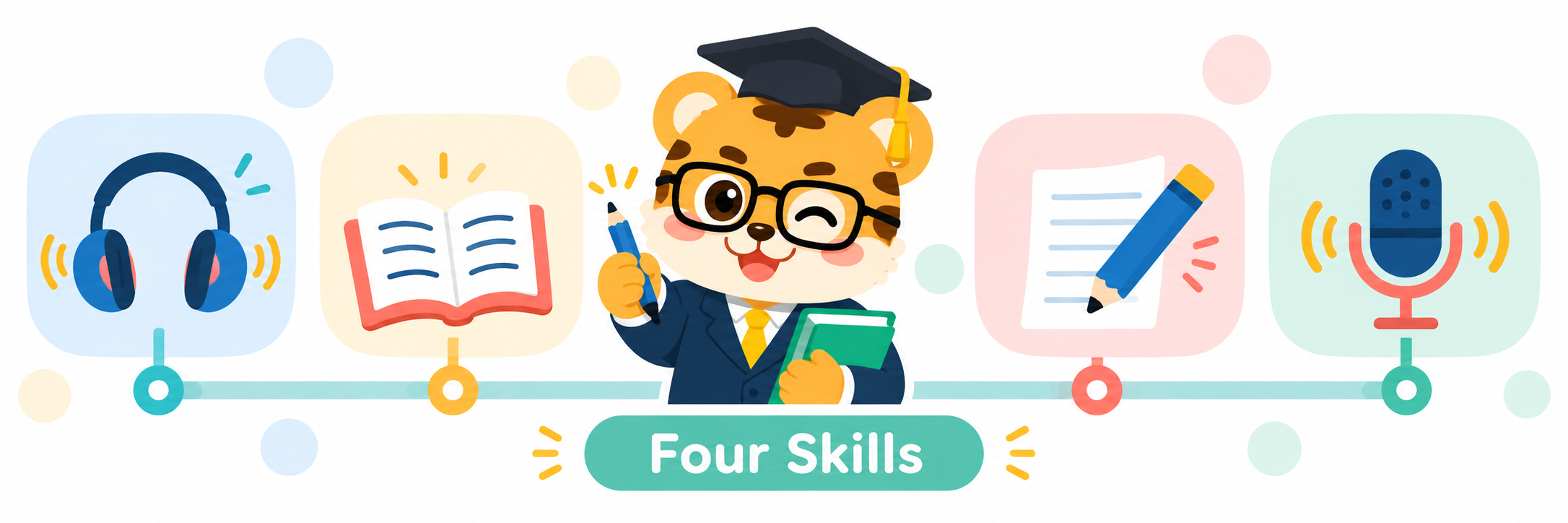
The sections are approximately 30 minutes for Listening, 60 minutes for Reading, 60 minutes for Writing, and 11–14 minutes for Speaking. Listening, Reading, and Writing are completed in the same test session, with no break between sections. IELTS describes that session as 2 hours and 40 minutes in its test-day guidance.
You may notice two figures on official IELTS pages: 2 hours and 45 minutes for the full Academic test, and 2 hours and 40 minutes for the Listening, Reading, and Writing session. They cover different parts of the schedule.
The first includes Speaking; the second describes the three-section session. Speaking is timed separately, so the numbers do not conflict.
The time limits also create different kinds of pressure. Listening moves forward with the recording, Reading asks you to manage your own pace, and Writing gives you an hour for two tasks.
Knowing only the overall length will not tell you how to use the time inside each section. Practise with each section’s own clock as well.
Taking the test on paper or on a computer does not change the core Academic section timings. The way you enter answers and the centre’s procedures can differ, though.
In particular, do not assume that answer transfer or screen navigation works the same way in both formats. Follow the instructions from the centre where you booked and plan around the full session.
02 Is the Speaking test on the same day?

Not always. Listening, Reading, and Writing are usually grouped in one session, while Speaking may take place on the same day or on a separate date arranged by the test centre.
Check your booking confirmation and centre instructions for your own time. Another candidate’s schedule may be different.
The Speaking test itself lasts 11–14 minutes and has three parts. Part 1 covers familiar topics, Part 2 gives you a topic card and one minute to prepare before you speak, and Part 3 develops into a broader discussion. The official IELTS Speaking format explains the structure and timing.
A short interview does not mean you only need to set aside fifteen minutes. You may need to check in, confirm your identity, and wait before being called. If Speaking is scheduled separately from the other sections, add travel time and a buffer around the appointment rather than squeezing it between other commitments.
Once you receive your test details, put the main session and the Speaking appointment on your calendar as separate events. If they are on the same day, allow time for travel, check-in, and waiting. If they are on different days, confirm whether Speaking comes before or after the other sections and save the centre’s message.
03 How should you practise and plan the day?
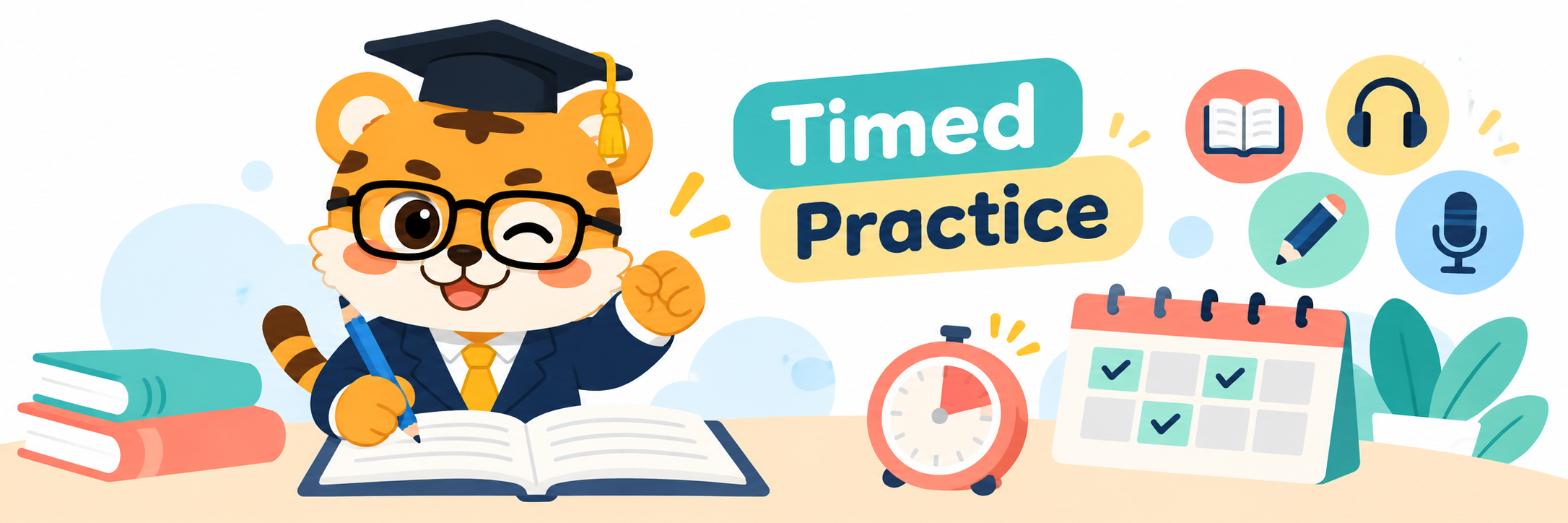
Build up to the real timing gradually. An untimed Reading passage can help you understand the text, but it will not show whether you can finish the full section within 60 minutes. Writing has the same gap: having ideas is one thing, completing both tasks within the hour is another.
You do not have to begin with a full test every time. Start by practising individual sections against the clock.
Then try Listening, Reading, and Writing back to back, as there is no break between them in the test session. Before test day, do a complete timed practice and time Speaking separately.
If you want one place to practise all four skills, Youshow IELTS offers Listening and Reading practice organised around Cambridge IELTS task formats, AI Speaking simulations for Parts 1–3, computer-style Writing practice with feedback, and study records for reviewing your work. Its feedback supports practice and progress review; it is not an official IELTS score or examiner’s assessment. Visit the Youshow IELTS website.
One more distinction: How long is IELTS Academic? usually asks how long the test takes. How long an IELTS result can be used is a separate question.
IELTS recommends that results are generally considered valid for two years after the test, while the receiving organisation sets its own acceptance rules. Check with the school or organisation you are applying to. The official IELTS scoring page describes the recommended period.
For your calendar, allow about 2 hours and 45 minutes for all four skills, with the first three sections taking about 2 hours and 40 minutes in one sitting. Add the check-in, waiting, and travel time around the schedule. Once those pieces are in the right places, How long will it take? becomes a plan you can actually use.
If you made it this far and found this useful, feel free to leave a like.
Thanks for reading. See you next time.
Continue this topic
Related reading and practice

Turn blog tips into your actual IELTS training flow
Don't just read tips. On the platform you can put speaking practice, real test drills and review into one steady prep rhythm.
- AI speaking mock practice
- Structured Cambridge IELTS practice
- Continue your personal prep rhythm after signing in
- Extend to writing feedback and question banks later